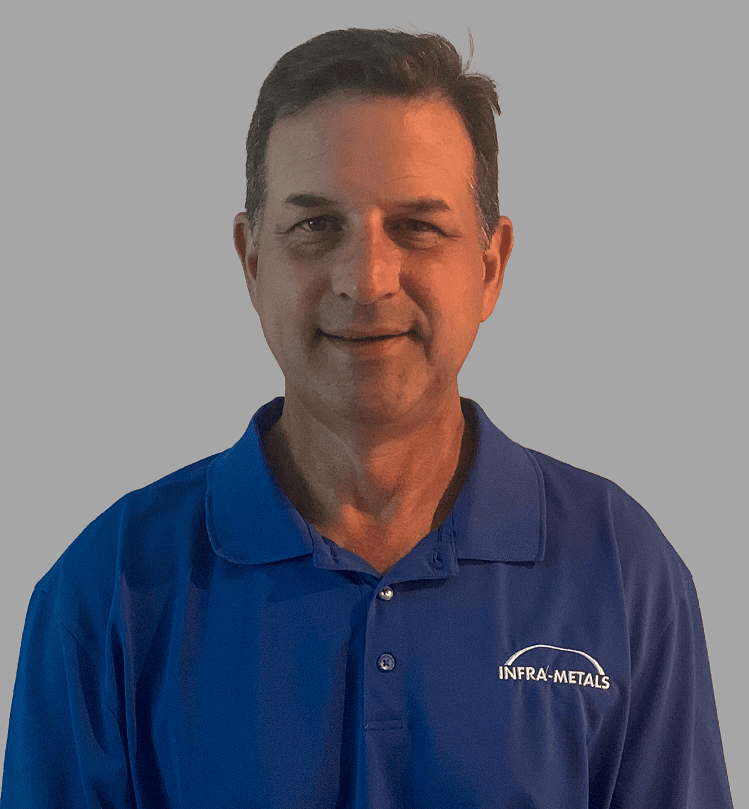
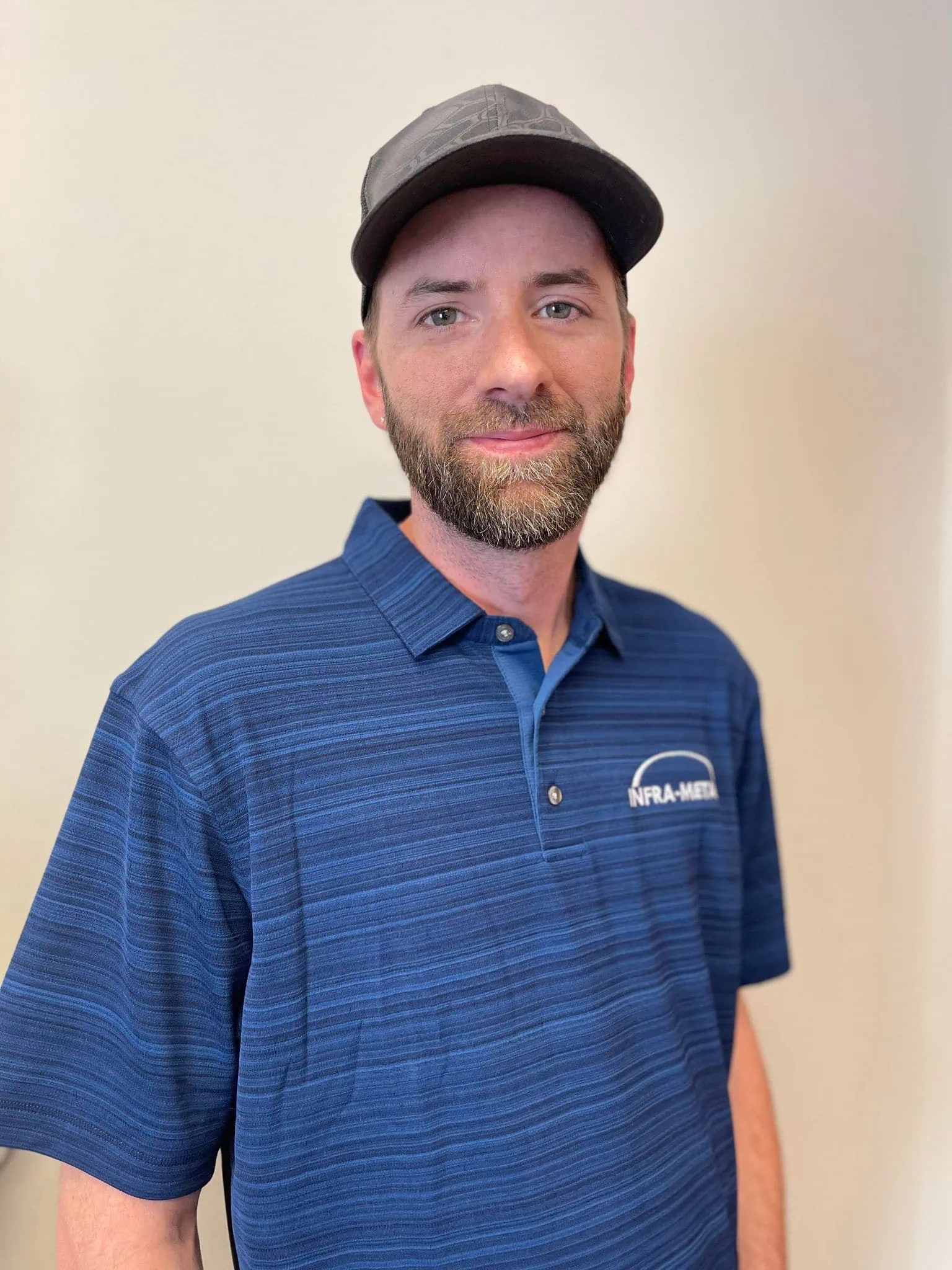
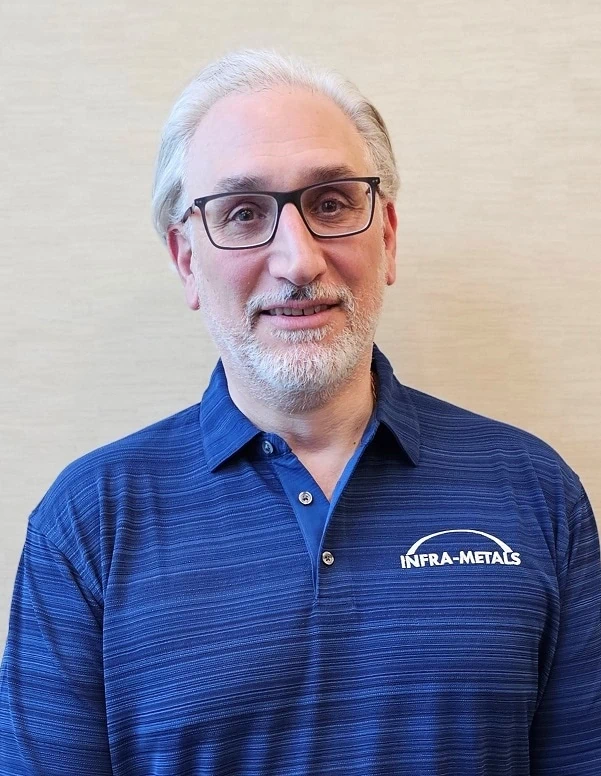
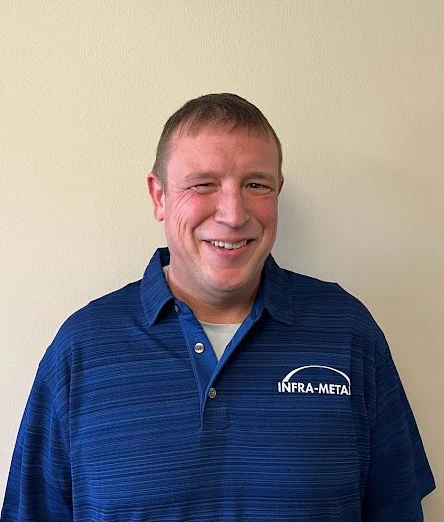
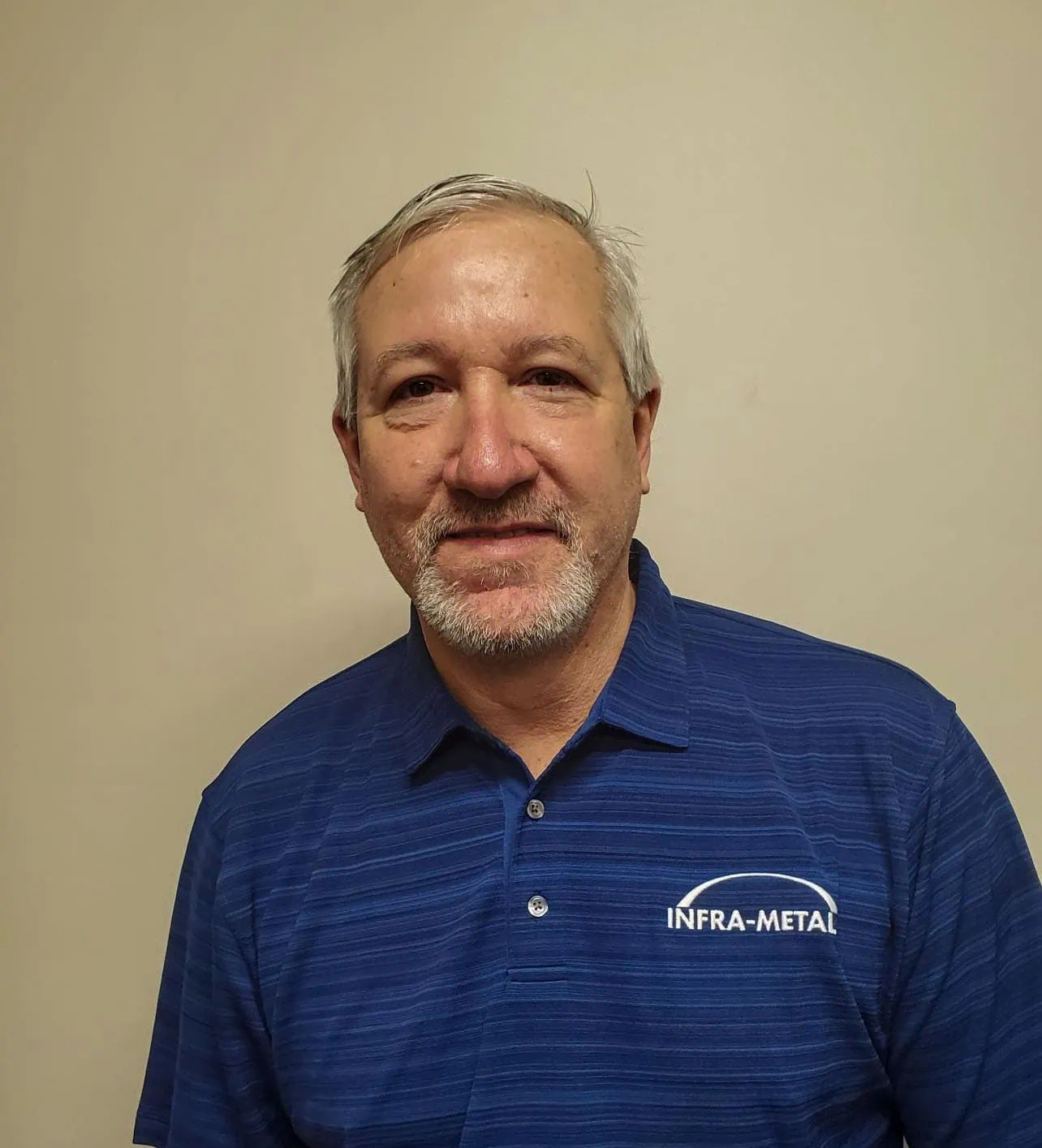
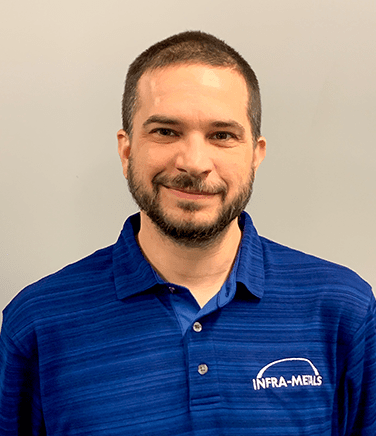
Austin Simundza is the Sales Manager in Marseilles, IL.
Austin Simundza, a graduate of Illinois State University with a Bachelor of Arts in Integrated Marketing and Communications, found Infra-Metals through a career fair hosted at the university prior to his graduation in May 2017. He started in the sales department in June of 2017 as an Account Representative. Austin went through a comprehensive training program consisting of primarily 3 phases. Initially he’d spend several weeks in the Marseilles warehouse learning the products, processing capabilities and operations of the business.
“I learned how long these processes take start to finish to have a good idea of what I was selling and how long it took and our limitations.”
After completing that he learned our software system followed by time in the Wallingford facility learning how to merchandise and sell steel.
“I learned the nomenclature and daily sales office communications between the sales staff during my time there. The lingo was one of the most valuable things I learned.”
Once his training completed he was destined for the sales desk. It’s noteworthy that Austin was, at that time, the youngest and newest member of the Marseilles facility for some time. He came to us with some managerial experience as he did manage a pizza restaurant during his time at ISU. Infra-Metals, being his first major career job, created an drive to prove himself amongst the veterans.
Career Growth
Austin became Sales Manager for Marseilles in April of 2022. Having spent the last five years at the sales desk he saw an opportunity and went after it. Austin is not only responsible for managing his sales team but also manages the product purchasing for tubing and pipe products. His daily activity consists of assisting with pricing material, helping his team reach personal and collective goals as well as developing strong relationships with his customer base.
“I want to be one of the sales managers that can assist , guide, and be a resource to others.”
Looking forward Austin sees himself evolving and growing into his current role. Over the last several years Austin notes a positive change in the way everyone at the division collaborates, communicates and goes out their way to respect each other.
“One of the most rewarding feelings is watching everyone succeed together.”
Hobbies
Austin enjoys freshwater fishing with his dad in Wisconsin, Live music (Umphrey’s McGee), Shark Tank and spending time with his wife, 2 dogs and 4 month old daughter.
Quotation
“Work like there is someone working 24 hours a day to take it from you. – Mark Cuban
Congratulations Austin on your journey with Infra-Metals! We’re looking forward to many years to come!
Due to its strength and durability, structural steel is one of the most important materials used in construction. It is vital in building applications ranging from framing to roofing to support structures and more. Because of its widespread availability and reusability, structural steel will continue to be a key resource in current and future building projects. Without structural steel, many construction projects would not be possible. However, manufacturing new steel can have major environmental effects, as these processes often require a substantial amount of energy.
Recycling structural steel is an effective method for reducing the building industry’s environmental impact. Steel is a highly recyclable material that can be reused without deteriorating quality or durability. Moreover, recycling requires less energy than creating new products, reducing carbon dioxide emissions.
This article will explore structural steel recycling and how this can contribute to a more sustainable future.
How Is Steel Recycled?
As consumers become more aware of the environmental impact of the construction industry, they are looking for more sustainable options for their building projects. Recycling structural steel can be a key component of these practices.
First, scrap yards collect and purchase various types of discarded steel from homeowners, companies, and other metal users. The scrap yard then sorts the steel by type, quality, color, and weight before processing and shredding them into smaller pieces. Rail cars transport the sorted, shredded steel to regional steel mills for recycling.
Structural steel recycling consists of gathering steel scrap from diverse origins and meticulously classifying it according to its type and quality. The sorted scrap is subsequently subjected to melting in furnaces, utilizing either Basic Oxygen Furnace (BOF) or Electric Arc Furnace (EAF) methods. The steel attains the desired composition through refinement, subsequently taking the form of beams, columns, or plates.
In the BOF method, molten iron is combined with scrap steel, and oxygen is blown into the furnace. This results in a chemical reaction that removes impurities and adjusts the carbon content to create high-quality steel. On the other hand, the EAF method uses electricity to generate intense heat, melting scrap steel in an electric arc furnace.
Remarkably, the recycled content of structural steel produced in the United States averages 93%, and steel is 100% recyclable. In contrast, other construction materials like reinforced concrete can only be downcycled. At the end of a building’s lifespan, 98% of all structural steel is recycled into new products—such as new buildings, automobiles, and home appliances—without losing physical properties. This makes structural steel a cradle-to-cradle material that can be recycled repeatedly, contributing to sustainable construction practices and resource conservation.
The Importance of Environmental Product Declarations
Environmental Product Declarations (EPD) are valuable tools in emphasizing the significance of recycling structural steel and meeting the requirements for sustainable, environmentally friendly construction materials. EPDs serve as comprehensive documents that provide transparent and credible information about the environmental impact of products.
Various rating systems exist to assess and certify the environmental performance of construction materials. These systems, such as LEED (Leadership in Energy and Environmental Design) and other regional rating systems, establish criteria for evaluating the sustainability aspects of building materials. The American Institute of Steel Construction (AISC) actively collaborates with steel mills to develop industry-wide EPDs that comply with these rating systems.
The manufacturing process of structural steel involves certain environmental impacts, which are evaluated and disclosed in EPDs. These impacts include global warming potential, ozone depletion, acidification, eutrophication, and ozone creation. EPDs also provide an overview of the life cycle of structural steel, from raw material extraction to manufacturing and transportation. This allows stakeholders to assess its overall environmental performance.
Benefits of Structural Steel Sustainability
Structural steel sustainability offers numerous benefits for a more environmentally friendly and economically viable construction industry. Being a highly recyclable material, steel is easily recoverable and recyclable at the end of a building’s life cycle. This recycling capability reduces the carbon footprint associated with steel production.
Steel’s strength and durability contribute to the longevity of structures. Steel buildings can have a longer lifespan compared to other construction materials, reducing the need for frequent replacements and renovations. This extended lifespan results in fewer materials consumed over time and lower environmental impacts.
Steel’s durability and low maintenance requirements lead to long-term cost savings for building owners. Furthermore, steel structures’ design flexibility and efficiency can result in reduced construction time and labor costs.
Choose Infra-Metals for Premium Structural Steel Supply and Services
Since 1990, Infra-Metals has been a leader in servicing the structural steel market! Our strategy is to focus on providing quality steel products and precision processing, enabling us to offer an array of services. These include steel plate burning, drilling, saw cutting, and forming. We also prioritize professional and ethical business practices with our customers, suppliers, and employees.
Greg Borchardt is Vice President of Operations for Infra-Metals / Delta Steel.
Greg, a graduate of Texas A&I University with a Bachelor of Science in Industrial Engineering and a BBA in Business Management, began his steel career for a steel mill in Houston, Texas in 1989 as a Production Scheduler. In 1993, he took a job with Chaparral Steel in Midlothian Texas and they employed Greg as a distribution manager for the first part of his career. In 1999 Greg moved to Virginia to help build and operate the Virginia Mill. He then transitioned into the production side of the business when he became the General Manager of Steel Production. Fast-forward to 2009 after the historic purchase of the mill by Gerdau North America and 20 years working in steel mills, Greg looked to expand his career into other areas of the steel business.
After a lunch meeting with current leadership at Infra-Metals – Petersburg, Greg was offered a position as project manager in 2009.
“At the time I was in need of job and it was a blessing to have been given the opportunity to work for such a great company. What a great find!”
During this time, all of the Infra-Metals locations were migrating to a centralized software system that could enable greater visibility in product availability and production. Greg requested that he be allowed to train in all areas of the software, kind of a pseudo introduction to the service center business. This approach afforded Greg the education he needed to understand how Infra-Metals operated inter-departmentally.
Career Growth
Greg became the sales manager for Petersburg, VA in 2011. At the time, the group had many product managers and he served as central point of communication for the entire group of sales representatives, both inside and outside. After a short while as sales manager, Greg was promoted to general manager of Petersburg.
Over the years Greg notes “I’ve seen a change in mindset. We’ve graduated from just filling the trucks everyday to a more aligned mentality where employees truly care about each other. It’s a one for all and all for one way of thinking. The level of collaboration and cooperation is night and day from where we began.”
In 2019, Greg became the Vice President of Operations for Infra-Metals and Delta Steel. He is responsible for all of the staffing, safety, capital investments, maintenance, trucks and operations for all of the locations. He has witnessed significant growth over the past 14 years with us and we aren’t stopping. Since Greg began working with us we have added new locations, expanded existing warehouses and not only invested in tech and machinery but also made significant investments in our employees.
“I like seeing progress and having ideas that will make the company better and turning them into reality. Most of the good ideas aren’t mine, but I’m in a position to talk to many different people at many different locations and I like being the voice for the many people and ideas around the company.
“This is the place I retire from. I want the next guy to be really bored because everything is in great shape.”
Hobbies
When Greg isn’t traveling around the country, visiting our facilities, he enjoys golfing with colleagues, friends, and his wife Shelly. He also enjoys spending time with his now grown daughters Macy and Brittany.
Quotation
“A good plan violently executed now is better than a perfect plan executed at some indefinite time in the future.” – George S. Patten
Congratulations Greg on your journey with Infra-Metals! We’re glad we have you on our team!
Jessie Wiley is the Processing Coordinator for New Boston, OH.
Jessie worked in steel prior to arriving at Infra-Metals New Boston. He came to us with experience in operating overhead cranes, loading and unloading trucks and some production skills. In 2016 Jessie acted on a referral from a fellow friend and current employee of New Boston. His prior experience allowed him to hit the ground running, as a 3rd shift crane operator, with little training required other than learning the different steel shapes and how to load the jigsaw puzzle loads we ship.
“When I started loading trucks it was totally different that what I was used to and had to start from scratch.”
He never dealt with plate and beams before, let alone putting both of them on trucks for delivery. In the Spring of 2018 he was promoted to 3rd shift supervisor and almost every year after that he would move up shifts, finally landing on as 1st shift supervisor in August of 2020.
Career Growth
“I don’t want to be stagnant in any position. I look forward to working my way into an operations manager position at some point in my career.”
With this drive in mind, an opportunity opened up for processing coordinator in August of 2021. Jessie was reluctant at first because he’d never had an office position before.
“I asked for a couple of weeks to mull it over and came back and said I’d take on the role.”
This new job allowed Jessie to take on more responsibility both in managing the t-split line, camber and saws as well as getting the work orders out to the shop and queuing up the programs to run the saws.
“I really enjoy this role because I can still be part of the warehouse team.”
Hobbies
In his free time, Jessie enjoys playing golf, movies and spending time with his family.
Quotation
“Every champion was once a contender that didn’t give up.”
Congratulations Jessie and thank you for your contribution to our team!
Ralph Conte is the Credit Manager for Wallingford, CT.
Ralph has worked in credit across several industries since 1995, the majority of which has been business-to-business. Previously coming from the lumber industry, he began working in Wallingford, CT as an assistant credit manager in January of 2013. Working alongside the credit manager gave Ralph the know how it takes to be in the steel business. There are some tools that he didn’t have at his disposal before which afforded him better information when making decisions with accounts. Eventually in June of 2020 he would split duties with the existing credit manager and divide and conquer the territories Wallingford served.
Ralph also has an alternative personality… radio personality that is. Some may not now know this but Ralph was for some time a radio disc jockey for several broadcast stations throughout New England. While his Bruce Wayne personality collects the cash; the Batman shows up on radio stations with music and news. He continued this dynamic duo role for some time until he took over the entire credit department.
Career Growth
In February of 2022, Ralph assumed all of the responsibilities of the credit department. His ten years with Infra-Metals has allowed him to develop personal relationships with his customers.
“I want to make customers feel good and make it easy to do business with us. It’s important to have good bedside manners and salesmanship when dealing in credit and customer relations.”
As Ralph enters his 11th year in his credit role he eyes the future with unrelenting optimism. Infra-Metals has continued to grow and Ralph has grown with us. He notes that “the steel business is a lot more fun than the other industries I’ve served.” When Ralph ventures home or on the road to see customers, he feels a sense of pride when he sees projects we’ve worked on with our customers.
“Infra-Metals is a savvy business and one that I am going to stick with until I retire.”
Hobbies
To occupy his free time, Ralph enjoys golf and water color painting, both of which are relatively new outlets for him. He also loves family time, enjoying their recently acquired new home.
Quotation
“The third thing is the truth.”
Congratulations Ralph and thank you for your contribution to our team!
Steel is a versatile material that has been used to build bridges for over a century. They are ideal for several applications due to their durability, sturdiness, and reliability and are commonly used for road and railway projects. Moreover, they offer many benefits, including high strength-to-weight ratios, long spans, and various design options.
This post will review some of the most significant factors to consider while constructing a steel bridge.
Factors To Consider When Designing Steel Bridges
The following are the things to keep in mind when designing structural steel bridges:
Loads and Load Combinations
Loads are the forces that act on a bridge. Live loads are vehicles and other moving loads, while dead loads are the bridge structure. On the other hand, wind, seismic, and temperature loads are environmental loads. These combinations must be considered during the design process to ensure the bridge can safely handle them.
Structural Analysis
Structural analysis determines the behavior and performance of a bridge under various loads and load combinations. It considers different factors, including the structural system, material properties, geometric dimensions, and boundary conditions.
Redundancy
Redundancy involves providing additional structural members or elements to maintain the bridge’s integrity, even if one or more parts fail. Thus, a redundant design ensures the bridge’s safety, even in unforeseen events.
Limit State
Limit states are the conditions beyond which a structure can no longer perform its intended function. The limit-state design approach aims to prevent these conditions by ensuring the structure remains within safe limits under all loading conditions.
Design for Constructability
A well-designed bridge should consider constructability, reducing the complexity of the construction process and ensuring that it can be completed within budget and on time.
Design for Fatigue
Structural steel bridge designers must consider fatigue, especially for high-traffic bridges. Fatigue occurs when a material weakens and fails after repeated loading and unloading cycles.
Substructure Design
Substructure design refers to the bridge’s supporting components, such as piers, abutments, and foundations. It must maintain these components and maintain the bridge’s weight and load.
Splice Design
Splices are critical components of steel bridges, joining individual steel members together to create the overall bridge structure. It will ensure the connection is strong enough to resist various loads and combinations.
Bearing Design
Bearing design is essential in steel bridges, as it supports the bridge’s superstructure and transfers loads to the substructure. It must consider the loads the bridge will carry, the type of bridge, and its location. The most common types of bearings used in steel bridges are as follows:
Elastomeric bearings: commonly used in short and medium-span bridges
Pot bearings: preferred for long-span bridges
Spherical bearings: mostly used in curved bridges
The bearing design must also consider the bridge’s movement due to expansion and contraction caused by temperature changes.
Bridge Deck Design
A bridge deck is critical in structural steel bridge design because it carries traffic loads and provides a stable surface for vehicles. In addition, it must consider factors such as the type of deck material used to ensure safety and longevity.
Load Rating
The bridge’s strength and safety depend on its ability to carry loads and withstand forces, and a bridge’s load rating determines its maximum load-carrying capacity. Thus, it calculates the safe weight limit for vehicles and other loads crossing the bridge.
Corrosion Protection
Moisture, salt, and chemicals can corrode steel bridges over time. Therefore, steel bridges must be designed and built with corrosion protection in mind to ensure their long-term durability, safety, and sustainability.
Build Durable Bridges With High-Quality Steel From Infra-Metals!
As one of the biggest steel service centers in the US, Infra-Metals offers an extensive selection of products and services to meet your needs. Our centers are designed to cater to each region’s unique demands. We are committed to delivering high-quality services that are both efficient and cost-effective!
As more individuals seek alternative energy sources, the demand for solar electricity is expanding. One of the critical components of a solar energy system is the mounting structure. Solar panel mounting systems give solar panels the support they need to catch sunlight and convert it into usable energy.
This post will discuss crucial factors when selecting the most suitable solar steel panel mounting structure for your business.
Types of Solar Steel Panel Mounting Structures
Different types of mounting structures offer various characteristics, so selecting one that fits your needs is important. Here are the most common types:
Ground-Mounted: These solar panels are typically placed on the ground, in a field, or large open spaces. They are supported by a frame or mounting mechanism that ensures they remain firmly in place even in inclement weather.
Rooftop: Rooftop solar panels are an excellent solution for buildings with limited ground space. These are positioned on the building’s roof using a specialized mounting technique.
Pole-Mounted: Pole-mounted solar panels can be a great option in areas where rooftop and ground space are both limited. These systems may be deployed in several places around the facility and are mounted on one or more poles.
Floating: Solar panels built on bodies of water — such as reservoirs, ponds, or lakes — provide a unique chance to create renewable energy. The floating platform on which these panels are installed has many advantages, including lowering water evaporation and improving water quality.
Materials Used in Solar Steel Panel Mounting Structures
There are several materials used in mounting structures for solar products, including the following:
Cold-Formed Steel (CFS): This material has high strength, a long lifespan, and affordability. It is frequently used for solar panel systems that are roof-mounted and ground-mounted.
Aluminum: Aluminum is a lightweight, corrosion-resistant material easily molded to meet specific designs.
Stainless Steel: Stainless steel is a long-lasting, corrosion-resistant material that can survive seawater exposure. Thus, it is frequently utilized for solar steel panel mounting structures in coastal locations.
Galvanized Steel: This material has been zinc-coated to prevent rust and corrosion, making it ideal for places with tough weather conditions.
Structures for mounting solar panels are best made of CFS. This is a popular choice because of its strength and low cost. Further, it can assist in cutting installation costs while assuring the system’s long-term endurance and dependability. Still, selecting the material that best meets your project’s unique requirements is most important.
Factors To Consider When Choosing Solar Steel Panel Mounting Structures
Choosing the right panel mounting structure requires careful consideration of various factors, such as:
Location and Geography
The location and geography of a solar project can considerably influence the mounting structure chosen. For example, if the site is on a steep slope, a pole-mounted structure may be preferable over a ground-mounted system.
Another key factor to consider is soil type, as some soils may only be able to handle the weight of a ground-mounted system with additional foundation work. Shade from trees or other objects near the location can further restrict the amount of energy produced by the panels.
Wind and Snow Loads
The construction must be built to handle the area’s projected wind and snow loads. Failure to do so may cause damage to the panels or the building itself, potentially resulting in costly repairs or replacements.
Solar Panel Size and Orientation
The appropriate angle and orientation of the panels must be set to optimize energy production while meeting size and orientation specifications. For example, if the location has a southern exposure, the panels should be positioned to face south. Hence, the angle of the panels should be adjusted to capture as much sunlight as possible.
Budget and Cost-Effectiveness
It is important to weigh the advantages of the mounting structure against its cost. For instance, consider the long-term savings obtained by selecting a high-quality, long-lasting mounting framework.
Sustainability and Environmental Factors
Select a structure that has a minimal environmental impact and is built of environmentally friendly materials. Furthermore, it should be constructed to be easily dismantled and recycled at the end of its life.
Infra-Metals: Your Go-To Source for Steel Solar Panel Mounts!
At Infra-Metals, we are your one-stop shop for all your structural carbon steel needs! We have streamlined materials and processing capabilities, allowing us to provide you with the best materials and components for your application. Moreover, our extensive inventory enables us to offer multiple types of products on short notice.
Contact us to learn more about our services and how we can help you. You may also request a quote today to work with us on your next custom solar panel mounting project!
Eric Gray is the Traffic Coordinator in Marseilles, IL.
Eric, formerly a bartender from Ottawa, IL., decided to look into job opportunities and found out about Infra-Metals through a family friend. An interview was scheduled with the operations manager and he was hired to work as a crane operator on 2nd shift in 2006. Eric notes that his training was kind of touch and go in those days, yet he learned how to master the cranes and keep up with the fast paced environment of loading trucks and getting them out the door. Fast-forward to 2015 where Eric applied to be 2nd shift supervisor. There we several applicants at the time but Eric ended up landing the spot.
“I liked the challenge. I have good relationships with the shift guys and feel like there was a strong camaraderie that was formed with a lot of them.”
Eric worked closely with operations, traffic and even sales to ensure loads were completed and ready for delivery. He would find himself filling in for the processing supervisor which allowed him to learn the software system better. Many of these skills would ultimately help prepare him for his next role.
Career Growth
In January of 2018, Eric became the 2nd shift traffic coordinator. Working in the traffic department interacts with almost every department and is often times the busiest office during the work day. “I was at that point that I wanted a new challenge.”
In the traffic department, the workload changes daily from scheduling picks in the shop, to working with sales, to routing and delivery logistics. “Every day is different. When I walk through the door, the day always has something new to offer. I review the board and piece the puzzle together for that day’s deliveries.” He also handles the driver staff and ensures their routes are optimized for on-time delivery. Since his early days in the shop, Eric has seen a lot of growth at the Central Division, most notably the emphasis on safety.
“Everyone works together towards the same goals. We’re all moving together in the same direction.”
Hobbies
Eric enjoys running. He has competed in 3 full marathons, 8 half marathons and a spartan race. He is also a season ticket holder for the Chicago Bears. When not competing in marathons, running or rooting for the Monsters of the Midway, he cheers on his kids at their sporting events and band concerts.
Eric continues to keep his sights on the future and one day aspires to fulfill a management role at Infra-Metals. Congratulations Eric on a long career with us! You have been an integral part of the team and continue to add to the success of the Central Division and Infra-Metals as a whole!
Ken Crespi Jr. is the Traffic Manager in Atlanta, GA.
Ken’s career with Infra-Metals spans several decades and locations. He began working for Infra-Metals Wallingford in 1994 as the traffic manager. He was referred by his father, whom had been the long time credit manager at that facility. As the 90’s rolled on, business began adopting more network computer systems and the company was in need of someone to handle this new growth. In 1999 Ken was offered the position of IT Manager. At the time it was a brand new position for the company and he was left in charge to develop the roadmap for the solutions throughout the office and warehouse. He taught himself networking and implemented a peer-to-peer workgroup and email.
Career Growth
After spending four years in IT, he took on the opportunity as Credit Manager in 2003, taking after his father whom had retired several years prior. Ken was looking for more responsibility and was eager to learn something new. After six years as credit manager he looked again to what the company’s needs were and decided to that he enjoyed working in operations more and took another role as Processing Manager in 2009. Ken was in charge of scheduling work for much of the processing machinery in the warehouse, a role that brought him back to the production side of the business.
“I liked collaborating with the traffic department to fulfill orders. It was something I already had experience in.”
Eventually another opportunity opened up and this time it would take him and his family to a warmer climate. No more Nor’easters! He accepted the position as Traffic Manager at the Atlanta, GA. facility. Since the early days when the company was more decentralized, Ken has seen the Infra-Metals group come together and work towards more common goals.
“Because of the centralization and collaboration between the locations we have become a much stronger company.”
In his current evolution as traffic manager, Ken conducts daily discussion with drivers, many times covering safety concerns and best practices. The company has grown in his eyes and it now employs a positive environment for open communication.
“Infra-Metals is a place you can retire from.”
Hobbies
Ken has always enjoyed sports and in his spare time he likes playing softball, handball and soccer.
Thank you Ken for your many years with Infra-Metals!
Josh Kozlowski is the Traffic Manager in Wallingford, CT.
Josh, originally a Milwaukee native, moved to Connecticut when he turned 21. He began his career in the steel industry by working for a metal processor specializing in stamping. Josh gained valuable shop experience running one of the presses and eventually made his way into quality control. Eager to continue moving up within the organization, he quickly realized that there wasn’t a lot of opportunity for growth and decided to part ways and found his way to Infra-Metals through a referral. After interviewing, he began training with a class of 15 warehouse trainees in 2002. At the conclusion of his roughly three week training period, Josh began working as a 3rd shift crane operator. After a year in that role he became the 3rd shift loader. One year, in 2004, he moved up to shift supervisor where he’d spend the next 5 years.
Career Growth
In 2009 Josh took an opportunity to work in the traffic department as First Shift Traffic Coordinator. This ultimately would end up closely mirroring many of his current tasks and was an excellent preparatory position for what was to come. On the daily he would coordinate deliveries between sales and operations, building and scheduling loads all while paying attention to weight, trailer length and delivery geography. Traffic is the one department that has its hands in everything and every day poses its own unique challenges.
“Working as a team across all functional departments is key. We’re only successful together.”
Twenty one years later, Josh is now the Traffic Manager for Wallingford, CT. Josh enjoys the challenge everyday and not knowing what is going to pop up. He is responsible for the driver staff, managing carrier rates, scheduling truck and trailer maintenance and many other tasks.
“You never know what opportunities could be coming down the road. This company provides outside of the box opportunities.”
Over the last two decades Josh notes all of the growth that both the Wallingford facility and Infra-Metals overall has enjoyed. There have been many expansions, investments in new equipment and the implementation of key safety measures and personnel.
“The emphasis on Safety has been astounding compared to when I first started.”
Hobbies
Being from Wisconsin automatically makes Josh a Greenbay Packers fan. He really enjoys watching sports and supporting his team.
Quotation
“Always put your best effort in everything you do.”
Congratulations Josh! You have been an integral part of the team and the success of the Wallingford, CT facility!


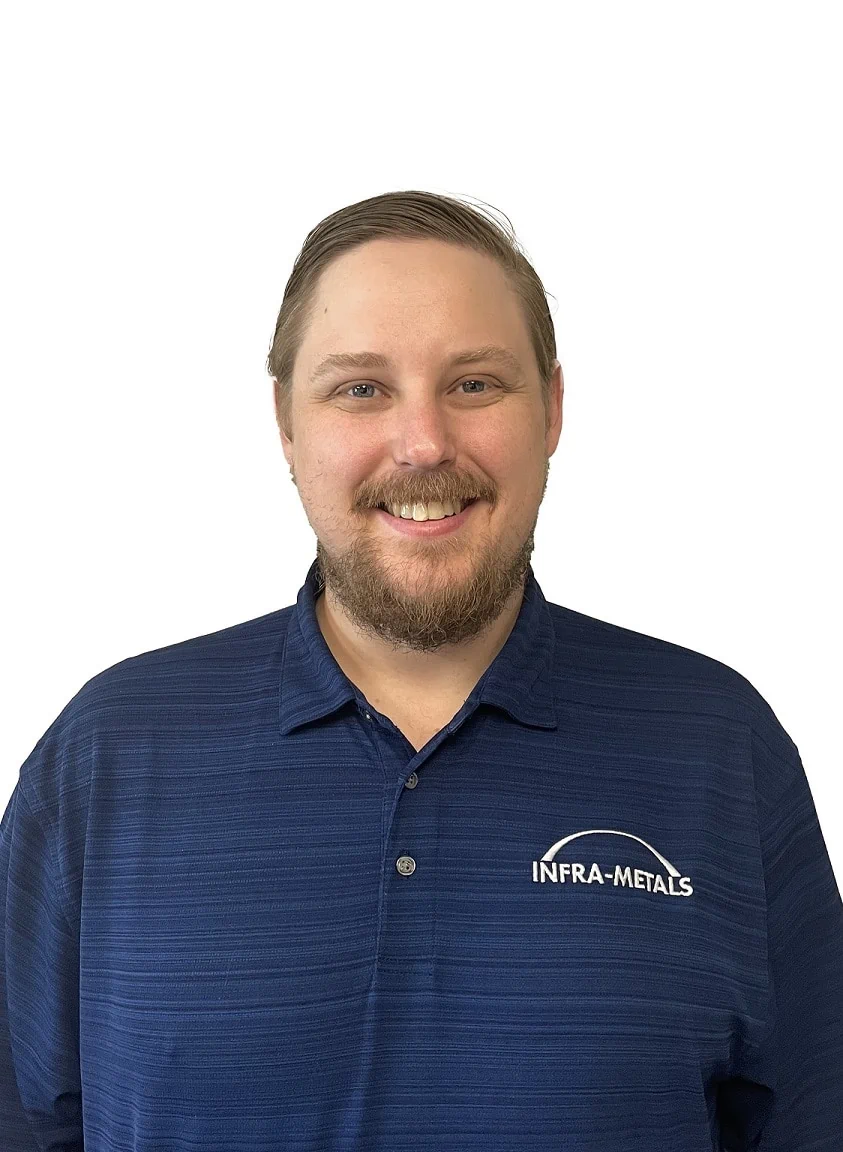 Austin Simundza, a graduate of Illinois State University with a Bachelor of Arts in Integrated Marketing and Communications, found Infra-Metals through a career fair hosted at the university prior to his graduation in May 2017. He started in the sales department in June of 2017 as an Account Representative. Austin went through a comprehensive training program consisting of primarily 3 phases. Initially he’d spend several weeks in the Marseilles warehouse learning the products, processing capabilities and operations of the business.